
teaching kids about disabilities

Today I would like to talk about some tips I have learned for teaching kids about disabilities and how to interact with them.  Exactly TWENTY years ago this June I participated in my VERY FIRST Muscular Dystrophy Summer Camp.   My first college roommate convinced me to go and volunteer to be paired up with a kid with Muscular Dystrophy and spend a week taking care of him and helping him to enjoy one of the best weeks of his life…a week at Summer Camp.

MDA 1

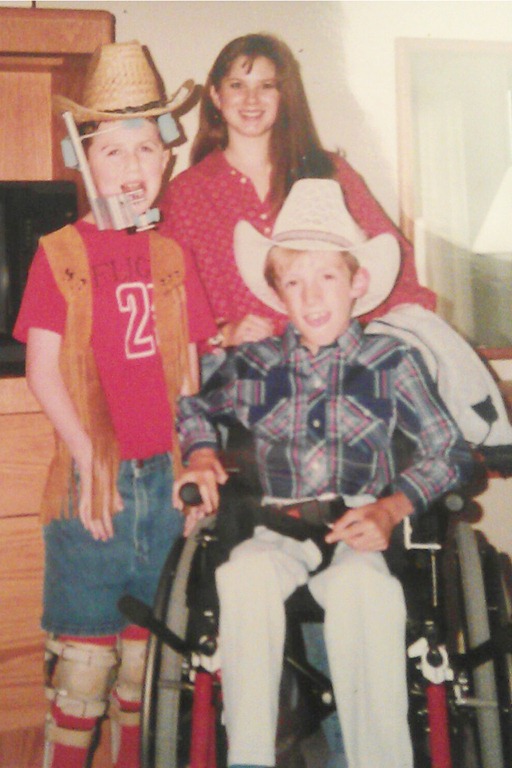
{1992–my roommate Heather, her camper Abram standing, and my camper Chad in the wheelchair}

I was 18 and scared to death, but really excited at the same time.  I had never done anything like this before.  My childhood friend had a brother with Down Syndrome who we played with, but other than that I had limited contact or knowledge about someone with disabilities.

MDA 2011 9a MDA 2011 2a MDA 2011 3a

{2011}

It was a life changing week for me.  I spent an entire week serving someone who could not do many of the things that came so easy to me, things I completely took for granted.  I was never the same.

MDA

{1993—My camper Denae and I.  I was 19 and she was 18 years old}

I have spent the next 19 years (with the exception of about 3 years which I missed due to being hugely pregnant one year and a couple years when I had a nursing baby).

MDA 2011 6a MDA 2011 7a MDA 2011 8a

{2011}

After the first couple of years of being paired with one of the Campers…I was asked to come back in 1994 as a Group Leader which is equivalent to a Camp Counselor.  This is what I have been doing with MDA Camp since.  We start planning the summer camp starting in January and then during the week long camp in June are in charge of overseeing a group of campers and volunteers.

image

{2011}

I feel like a lot of who I am is in part tied to this great experience I have been priviliged to be a part of.  These kids have so much to teach us.  We have lost so many of them throughout the years and I have been too way to many of their funerals.  But their lives have fully enriched me and my family members lives.

MDA 2011 11a MDA 2011 12a MDA 2011 1a

{2011}

One of the main reasons I have made the decision to continue to serve in this way, when I have a busy and growing family, is FOR my kids.  They have been able to come to many of the summer camp activities and be a part the MDA family.

image

{2010}

I wanted to share with you a few things that I have learned.  Keeping in mind that though, that people and children with disabilities have a wide range of abilities and independence.  And they may also have different ways that they like to be helped or treated.   But here are a few general things I have learned that can help teach you and/or  teach your children how to treat others with disabilities.

1.  Kids with disabilities want to be treated like everyone else.

2.  Get down to their level and talk to them face to face.

3.  Don’t lean on or hang on their wheel chair or equipment.  Their medical equipment is an extension of their body.  Please respect it.

4.  Kids are kids, disability or not.  They want to be treated as such.  They want to have fun too.  Include them and find ways for them to feel like they are a part of the group.  Don’t leave them watching on the sidelines…unless of course that is exactly where they want to be.  And then even then with some encouragement you can get them out there having fun.

5.  Don’t rush in to help someone with a disability unless they need immediate attention or help.  But…that doesn’t mean they might not need help.  Ask if you can help and how.  Many have varying abilities and a need for independence.  They may or may not want your help, but it never hurts to kindly ask.

6.  Don’t stare, it’s rude.  But at the same time…don’t ignore them either.  Treat them as you would any other person you might come across.

 image

{2009}

7.  If you child says something to you about someone with a disability this is a great opportunity to have a teaching moment with them.  For example if your child wonders why a person is in a wheelchair…don’t get embarrassed and try to hush them up.  This may come across as something to be feared or secret.  Simply explain to them that they need the chair to be able to get around because their legs don’t work like yours do.  Then try to compare it to something they can understand…like how some people need glasses to help them see.

8.  If the disabled person overhears your discussion, they may even join in and give your child a bit more explanation.  I ALWAYS appreciate it when this happens because your child will be able to see that they are just like them.  It can take away some of the fear of the differences.

9.  Do not talk down to someone with a disability or use “baby talk”…or one of my personal pet peeves…talk loudly (unless the person is hard of hearing). 

 mda 3

{2006}

10.  Respect and understand a person’s confidentiality.  People with disabilities have a right to privacy.  They are not obligated to tell you about their disability.  If someone does tell you about his/her disability, do not assume that he/she is comfortable with you telling other people about his/her disability.  Always ask permission to discuss the disability before you do it.

I hope some of these tips are helpful.  The most important thing I would like to get across is that kids need to be taught how to interact with others who may act or look different.  And just because someone has a disability doesn’t mean that they are any more different than you and I.  They have the same thoughts, feelings, goals and aspirations as you do.

Do you or someone you know have a physical disability? What have you learned that could help others interact in a respectful way?