




Learn how you can get your home organized with my easy step-by-step organization course. My course is full of organization ideas as well as home organization tips and tricks to get your life and home organized and keep it that way.

ONLINE DECLUTTERING COURSE
For the past several months I have been putting together my Online Organization Course, The Balanced Home. I am excited to teach you my decluttering and cleaning process. These processes also teach you how to create simple routines and cleaning schedules which allow you to naturally maintain your clean and organized home.
No need to hire a professional organizer, or live with the clutter because you will have the skills and learn how to overcome any mental barriers or fears you might have to get started!
Stop Drowning in Household Clutter
Transform your space without the overwhelm. Join The Balanced Home Course for a step-by-step system to get your home organized and keep it that way for good.
Learn More & Join Today →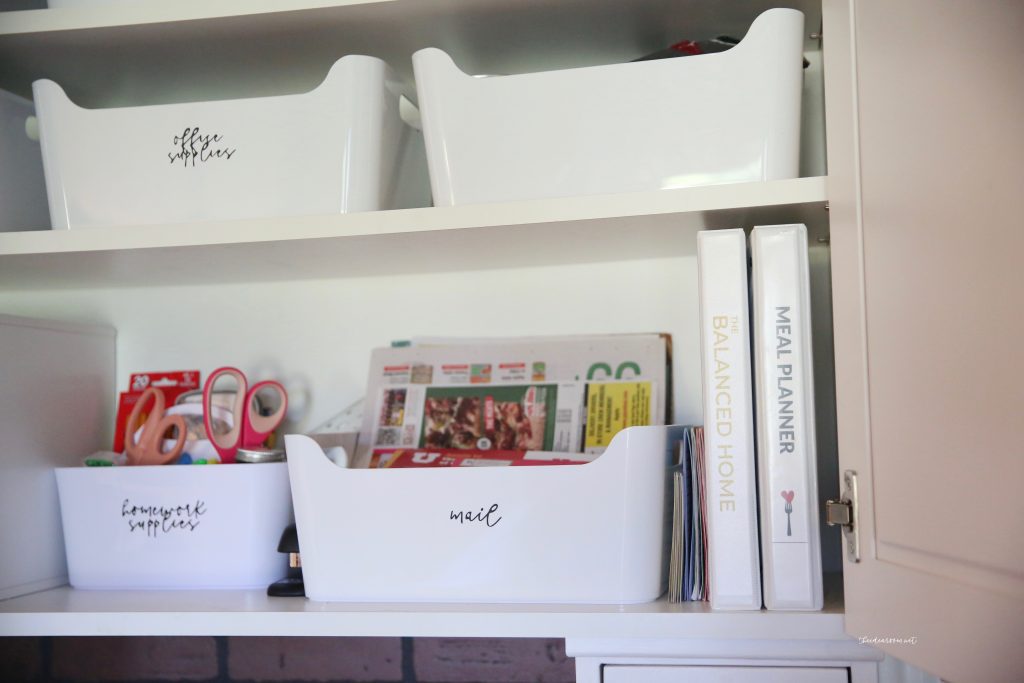

WHAT DOES THE ORGANIZATION COURSE COVER?
The Balanced Home Organization Core
($1,000 Value)Contains my core Decluttering and Organization Processes, which shows you how to:
- Learn how to declutter and organize your home–by learning processes and techniques that really work!
- Deal with stuff you don't know how to get rid of
- Understand what qualifies as hoarding
- Understand how to overcome hoarding tendencies
- Deal with your junk room or junk drawer
The Tools
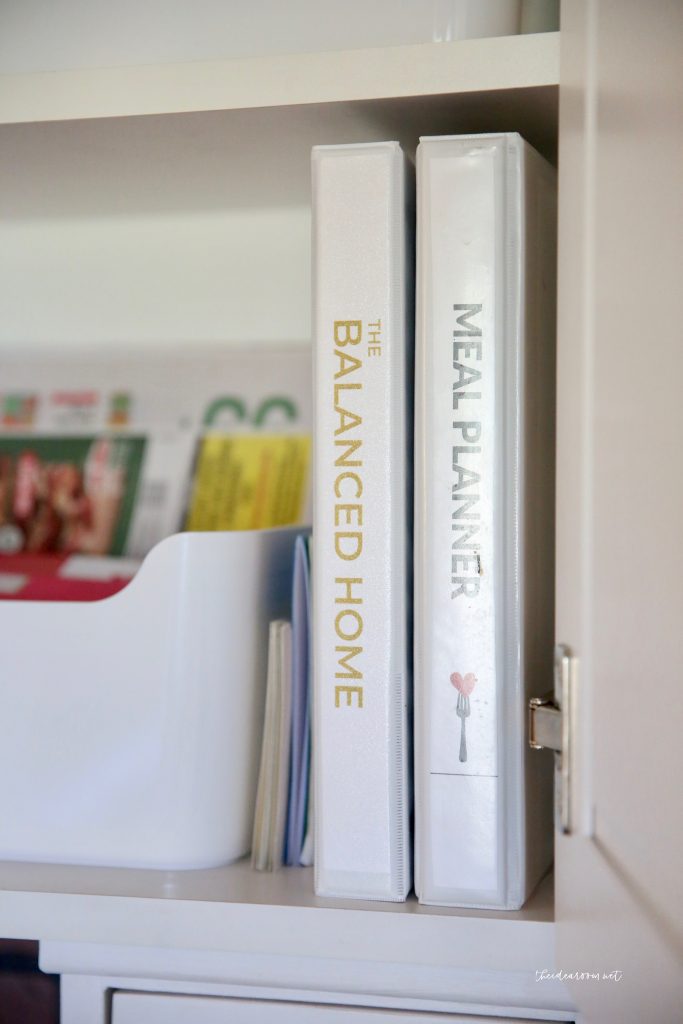
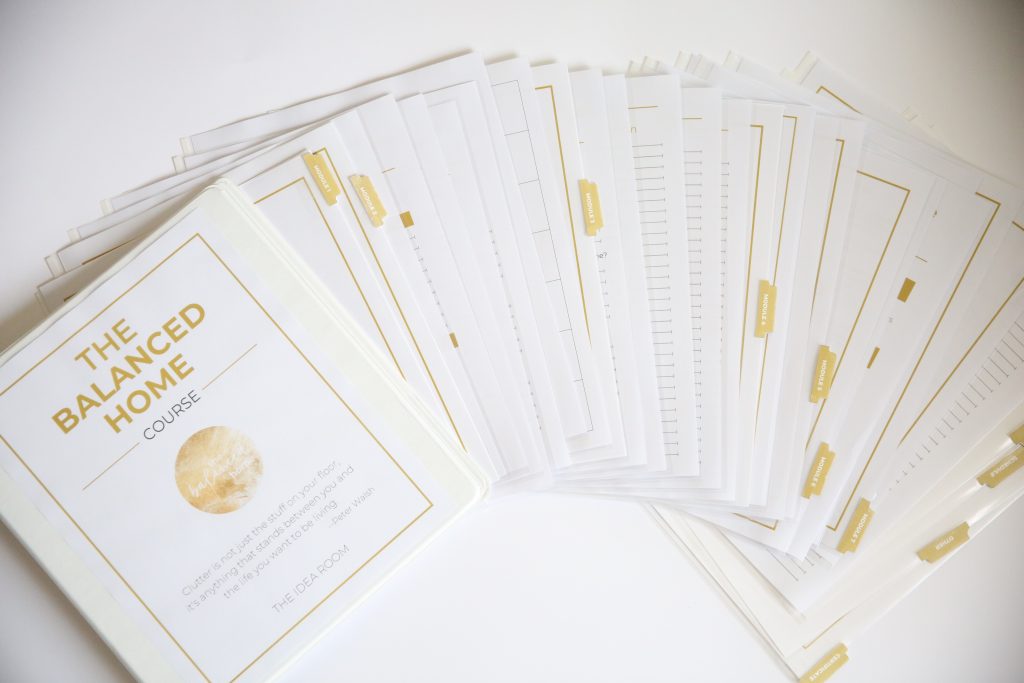
- Workbook, Resources, Labels, and More ($250 Value). Contains everything you need to help guide you through each lesson, including:
- An easy-to-follow workbook to guide you step-by-step through the lessons
- Printable Labels
- A vision sheet for your home
- A working checklist of tasks you can accomplish in 30 minutes or less
- Shopping and To-Do Lists
- Monthly Calendar and Weekly Schedule
The Mental Foundation
The best processes to overcome mental barriers from Tony Robbins and Dean Graziosi's Mastermind Course ($200 Value). Helps you to find the time, the energy and the motivation to organize your home by:
- Discovering your “true, internal why” -> what motivates you to want an organized home
- Helping you clearly identify what is holding you back from success
- Teaching you how to organize your schedule to create new pockets of time
- Helping you discover what is most important for you to accomplish with your time, as opposed to just urgent or habit
- Helping you cut out the things that aren't important and identify gaps in your schedule you can dedicate to working on your home
Your Ideal Home
The best processes to set and achieve your vision by breaking it down into actionable steps ($300 Value). Teaches you how to break down an overwhelming project into small, manageable steps, by:
- Clearly defining your goal and vision for your home
- Learning how to evaluate specific rooms and identify what you want to be improved
- Identifying specific, easy to complete tasks in each room that will contribute to your overall goal without overwhelming you
- Getting your family or others involved in the process
Cleaning and Maintaining
The best processes to clean and maintain your home after it has been organized ($200 Value).Teaches you how to maintain your home once it is clean and keep it organized, by:
- Providing you with the basic cleaning routines you need to naturally stay in control of your home
- Teaching you my amazing “Ten-Minute Clean-up” process, which allows you to clean an entire floor / room in ten minutes or less!
- Showing you how to establish routines with your kids and other members of the family
- Sharing important resources such as chore cards, favorite cleaning products, and a deep-cleaning checklist, and more
- Explaining the laundry routine we use in our home to get our laundry done every week without even thinking about it
- Teaching you how to deep clean your home after it has been decluttered and organized
- Showing you how to help the other members of your household be on the same page and not “unclean” your home
During the course, we will:
- Show you the process of how to go throughout your home decluttering, cleaning, and organizing. Then you can take this process and go throughout all the rooms in your home–including the bathrooms, kitchen, craft room, home office, basement, entryway, playroom, garage, attic, and all other rooms in your home–cleaning and organizing.
- Clean out and organize not just the rooms themselves, but organization spaces such as closets, shelves, drawers, and bookshelves.
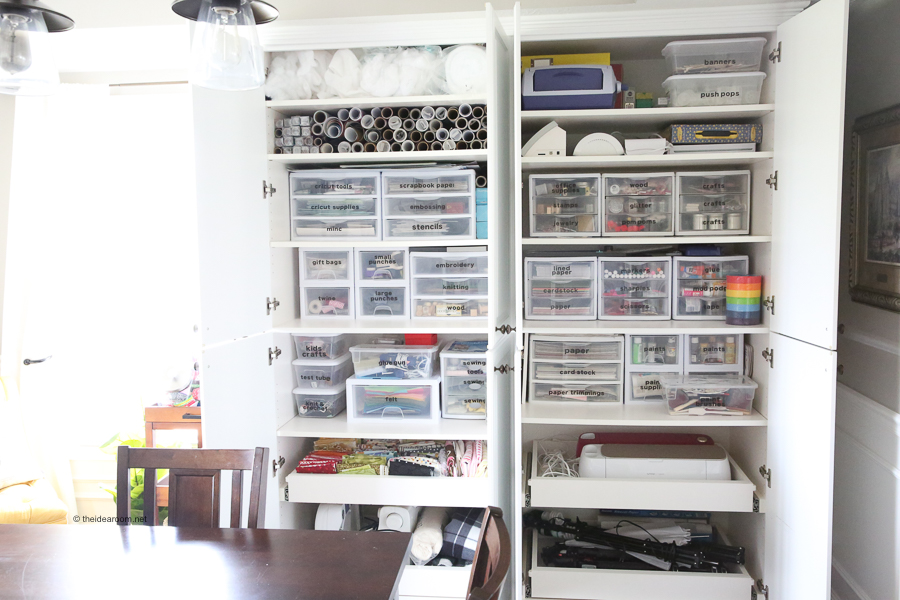
- Learn how to properly use organization equipment, such as bins, drawer organizers, storage bins, food storage containers, lids, and baskets.
The Private Balanced Home Community
(BONUS – Priceless). Provides a community that you can go to whenever you need a place where you…
- Seek inspiration and ideas from others
- Receive support and motivation from others
- Share your successes and see the successes of others as we all work towards finding balance and clarity in our homes.
- Can ask questions and let me know what you may still need help with so that I can continue to cater the course to your needs


What Do People Have To Say About My Organization Course?
“This course was instrumental in helping me organize my space as well as my time. As a busy mom, I have a better grasp on what my days need to include so that I can enjoy my family rather than spend my time spinning my wheels cleaning up after everyone.”
“The Balanced Home Course helped me to be the “professional organizer” for my family! Simple steps to follow, check lists, printable labels, suggestions and worksheets will keep you on track to successfully maintain your own balanced home.”
“I am pretty sure I have solved more issues with the seven layers and clarity tool than I have in 6 months of therapy!! I think this course is going to help much more than my home. Thanks Amy!!!!”
When I realized I had been overcomplicating the idea of organization, that simplifying was a key component, then things really started to fall into place!”
When I realized I had been overcomplicating the idea of organization, that simplifying was a key component, then things really started to fall into place!””
HOW TO GET MOTIVATED TO ORGANIZE YOUR HOME
HOW TO OVERCOME FEARS AND MENTAL BARRIERS
I asked and these are the things that are holding you back from getting started! I made sure my course helped you overcome your specific fears and developed processes to address each of the concerns below. Have you ever had any of the same concerns?
- “I don't have the time.”
- “I don't know how to break it down into manageable chunks.”
- “How do I balance other activities?”
- “I don’t have enough energy / motivation.”
- “I'm overwhelmed and don't know where to start.”
- “I'm scared / unable to commit.”
- “I don't trust myself.”
- “I don't have the confidence I will finish.”
- “How do I maintain / keep on top of it?”
- “I have a hard time with inconsistency / finding balance.”
- “I'm afraid of quitting too soon and having it be a mess.”
- “How do I build the habits and routines?”
- “Keeping it clean and organized”“Staying focused and not getting distracted.”
- “What if I have physical limitations.”
- “I don't have the supplies / resources / money (i.e. containers etc.) / storage space.”
- “I don't want to part with things.”
- “What Do I do with all the stuff? Donate? Kids?”
- “What if I need it later?”
- “My family has stuff they want to keep.”
- “Family is not being helpful or even counterproductive… How do I get my family on board?”
- “No sense of design / vision for what I want.”
- “Lack of knowledge.”
- “Afraid of not doing it right.”
- “Being okay with not having it perfect.”
STILL NOT READY TO BUY?
Because I know that sometimes it can be difficult to take that initial leap of faith, I wanted to give you something that would allow you to get your feet wet a little, something that you could access RIGHT NOW. I think you'll like it. I've opened up a “sneak peek” section of my course, where you can access one or two of the lessons that are a part of The Balanced Home Course. If you click the button below you will be able to create your own personal account / log in for the course and access the “sneak peek” videos.
OTHER ORGANIZATION PROJECTS
If you are interested in taking a deeper look into some of the spaces in my home, check out the following posts!





Thank you for this post! Growing up I was very reserved (there was a time period when I refused to speak in public at all), and my parents always labeled me as “shy” whenever I was introduced to anyone. It was a label that haunted me for a very long time in my life, even as I matured and ‘broke out of my shell’. Now I cringe when my mother-in-law calls my less outgoing daughter ‘shy’. Thank you for making parents aware of the long-term damage that labeling a child could have to their self-image.
Lilac, thank you for your comment. You have an advantage with your daughter because you know how it feels to be labeled. Don’t hesitate to ask your mother-in-law to refrain from calling your daughter “shy”. Explain how it affected you and tell her how you would like her to handle the situation instead. She will understand because she loves you and her granddaughter. You will also know that it is really helping your daughter. :)
Oh this is soooo true! Ask me how I know! *I* was that labeled child! I’m the youngest of 7 and whenever I didn’t speak, because, yes, I was very, very shy, I think my mom was embarrassed–and I don’t blame her–but I can STILL hear that phrase, “oh, she’s just shy” over and over in my head! I don’t know that hearing it made me more shy but it caused me to use it as an excuse for, well, frankly being rude and not learning that it was proper manners to respond when spoken to. Years later, I found out that a lot of other kids thought I was a snob!? Just because I was shy and didn’t speak! I now have 4 children, one of which was very shy as a child but I never, ever labeled her that–at least never in front of her–and she learned to speak up….which eventually will get a child out of their shell. There really is nothing wrong with being shy but there is something wrong with lacking manners–I have made sure my children (not so little anymore!) know the difference. Labels can be awful things.
Cheree, I love this comment. So many little nuggets of wisdom. You are right, there is nothing wrong with being “shy”, but lacking manners, yep, that’s a problem. And, labeling will empower our children to use it as an excuse, which then makes them more like the label. It is a vicious cycle. Love that you were able to take your experiences and apply them to your own 4 kids, making their experiences growing up, better. :)
I completely agree!! As soon as kids are labeled shy and know what that word means, they automatically become that, even if they are not. At least that’s how I use to be, and I think that is what happened to me! Great information!
Laura, thanks for your comment. Labels DO stick, and as parents we have to be really careful what we say.
Thank you! This is totally true of my eldest, and I do struggle with the don’ts, and am working on the do’s. I am curious though, at what age do you think they are actually knowingly being rude and can help not doing so?
Miriam, that is a good question. Hard to say an exact age, it will be different for every child, but even a 3 year knows they are being rude :) Helping them understand how their actions affect other people, and role playing with our kids will make a big difference. Then they can understand that rude hurts other’s feelings and it will help them have a desire to modify their behavior.
I love this post! I was labeled “shy” as a child and I never felt like I could speak up even when I did feel comfortable in a situation. I have always wondered how to help my future kids with this, so thank you thank you thank you!
Hannah, so glad this was helpful. Thank you for your kind comment.
Thank you!
I was shy when I was young. Still am. Now I’m swing it in my 2 yr old. He is extremely uncomfortable in new environments. It’s something that I’m having a hard time with dealing and accepting. Talking to him about situations beforehand is something I really need to work on.
Hi Carrie, thank you for your comment. Talking to your son before hand will really help prepare him and ease his worries in situations. Good luck, two is a really fun age.
While I totally agree with the concept of not labeling your children, I’m wondering why we are talking about the word “shy” as if it is a bad thing. Feeling shy is completely normal and acceptable, right? I will often ask my children if they are feeling shy that day–because it is okay to feel that way. I am careful not to label them as “always shy” but I also don’t want them to think it is wrong or bad to feel that way. Perhaps I am just defining it differently: you may be describing shy as a painful, uncomfortable feeling, when I am thinking of it as a desire to just be quiet and observe in a certain situation.
Hi Carolyn, Great points. No, being shy is not a bad thing. And you are right, there is a need for our kids to know that it is okay to have feelings of being quiet and observing. What we don’t want to do is label them, and as Cheree pointed out in a previous comment, kids need to understand the difference between being shy and lacking manners. Or using ‘shy” as an excuse to be rude. Love that you are helping your children understand how they are feeling. Such an important life skill.
I could copy Hannah’s comments exactly. : )
Hi Rachel, thanks for your comment. Hannah did say it well, didn’t she!
This is some great advice Heather. I grew up with the shy label too and it still has a tendency to creep up on me in social situations! Even though I am a full grown woman. Great advice to help your kids who may struggle with “shy” tendencies and who may need extra help to learn how to handle social situations. A great life skill to learn at an early age.
Thanks Amy, there is an amazing group of women here on The Idea Room. I love being a part.
Great advice! I was the youngest of four and was often labeled “shy”, and was uncomfortable to be put on the spot in social situations. I now have a granddaughter that is quiet and don’t want to do the same thing to her! I am going to show this to my daughter. It might seem like this granddaughter is quiet because in comparison her older sister is a chatterbox-plus!
Hi Sue, thanks for your comment. I hope the post is helpful for your daughter and granddaughter. We have a little one who loves to chatter too!
Love this post! I was often labeled as shy when I was little and it is so hard to break out of that label. My daughter is similar to I was at a young age, we call it “cautious”!
Hi Amy, you’re right. It is really hard to break out of labels. “Cautious” is a creative way to approach things!
Great post. I was once told that my youngest son didn’t “have appropriate conversation with strangers”…he had just turned 5 and Um…strangers??? This IS correct. That was actually said to me.
Wow, Mrs. B, That would have left me scratching my head a little also! :) Thanks for your comment.
While your article has some good points, I have had kids be shy … and my youngest is autism spectrum. If someone’s kid is being “really shy” at 3 or 4 … they may need to have the kid checked. By your pediatrician or if you have a local Early Childhood Education center.
I have just recently introduced him to the term at age 10. Because otherwise, he doesn’t understand why he feels so differently that what is “normal”. We practice social skill, he goes to special classes at school, but when his basketball coach tells him to just be normal … he doesn’t know what that means. He has normal friends and he has autistic friends … and he understands that autism is a spectrum. Some are more, some are less. My shy kids have out-grown the habits and though are still introverts can function in a normal social setting. My youngest may never outgrow all of his different habits.
Hi Valerie, Thank you for your suggestions and insight. You are right, if as parents we sense there is a bigger problem, we should consult our pediatrician. They can help us determine if something “bigger” is going on. It is great to hear how you have helped your son understand how he feels in social situations. This is a life skill that we all need. :)
As a parent of a couple quiet girls and as someone who is “shy” herself, I’d say these are great tips. When my now-12-year-old daughter was in preschool, she started visiting a psychologist and was diagnosed with Selective Mustism (SM). All through preschool and kindergarten, she did not utter ONE SINGLE WORD to her teachers, though she loved them. Gradually, and with the help of psychologists both at her clinic and at school, my daughter outgrew + overcame her SM. When my daughter ran for class president in 5th grade, I was near tears hearing her speak before a room full of 100+ students and parents. Learning about SM and helping Lauren work through it was a valuable experience, and I’m so proud of her today. Thanks for sharing this piece.
Heather, what a great story. And a testament to your family and your wisdom as you helped your daughter work through her SM. I got chocked up myself, imaging what it would have been like as you stood there and watched her address over 100 people. :)
I’ve heard this advice before about not labeling children and it is worth repeating! Excellent post with practical do’s and don’ts! When people label my “shy” child, I usually say that she’s just observant and will talk when she’s comfortable. Then she’s able to open up on her time and not mine. Thx for this post!
Hi Mary, I loved hearing that you stand up for your child. It makes your child feel like you are on their side, instead of against them, or embarrassed by them.
Thanks for your comment.
As a shy person myself, I’m frustrated when people make me feel “less than” others simply because I’m quiet and reserved. There is nothing wrong with being shy. People have made me feel terrible about myself because somehow being reserved isn’t an okay way to be.
Thank you so much for this post! Being labeled as shy affected my entire adult life. I would constantly say to myself, “Oh you could never do that because you’re too shy.” I always worried that my own children (don’t have any yet) would be shy and have to suffer like I did. I guess it never occurred to me that shy can’t be ‘created’ and that by simply doing the things you suggest above, I can help my children be comfortable in their surroundings and comfortable with who they are.
correction: “can” not “can’t”
I really appreciate this post. Great insight!
lexmallabooks.com
Wow! I needed this. How many times have I said that exact phrase about one of my kids. And those are great tips on not labeling your children!
I agree that we shouldn’t label our children, but rather give them the space to grow into their own people. In our family, however, our children (ages 4 and 3) have taken the word “shy” to mean a temporary state of being – like being frustrated, or cranky. When approaching a new situation, my very outgoing daughter will often tell me, “I’m going to be shy for a little bit,” which for her means she’ll not talk for the first few minutes after we arrive. We always meet their warning of being shy with acceptance and understanding, and, depending on the situation, with our own similar views. It’s nice that they have the vocabulary to express their emotions when going into new situations.
This is a big thing I want to do differently than my mom did with me. I think her saying “She’s shy” was the easy way out for her. She did not have the drive to teach me how to talk to people. Being labeled by my own mother as “shy” affected me negatively for decades. When I was not around her, I was NOT shy, and was seven capable of being a leader, but as soon as I was around her, I molded myself to fit the label she put on me. As the years went by, it was harder to get away from that label. As a child, I believed what my mom said about me (“mom knows best”). Sorry; I’m not trying to be negative. I really appreciate your solutions. I want to help my future child so badly that I am researching this well ahead of time. I like your practical advice. :)
Oops, I meant to type “was even”. (not “was seven”)