




Learn how you can get your home organized with my easy step-by-step organization course. My course is full of organization ideas as well as home organization tips and tricks to get your life and home organized and keep it that way.

ONLINE DECLUTTERING COURSE
For the past several months I have been putting together my Online Organization Course, The Balanced Home. I am excited to teach you my decluttering and cleaning process. These processes also teach you how to create simple routines and cleaning schedules which allow you to naturally maintain your clean and organized home.
No need to hire a professional organizer, or live with the clutter because you will have the skills and learn how to overcome any mental barriers or fears you might have to get started!
Stop Drowning in Household Clutter
Transform your space without the overwhelm. Join The Balanced Home Course for a step-by-step system to get your home organized and keep it that way for good.
Learn More & Join Today →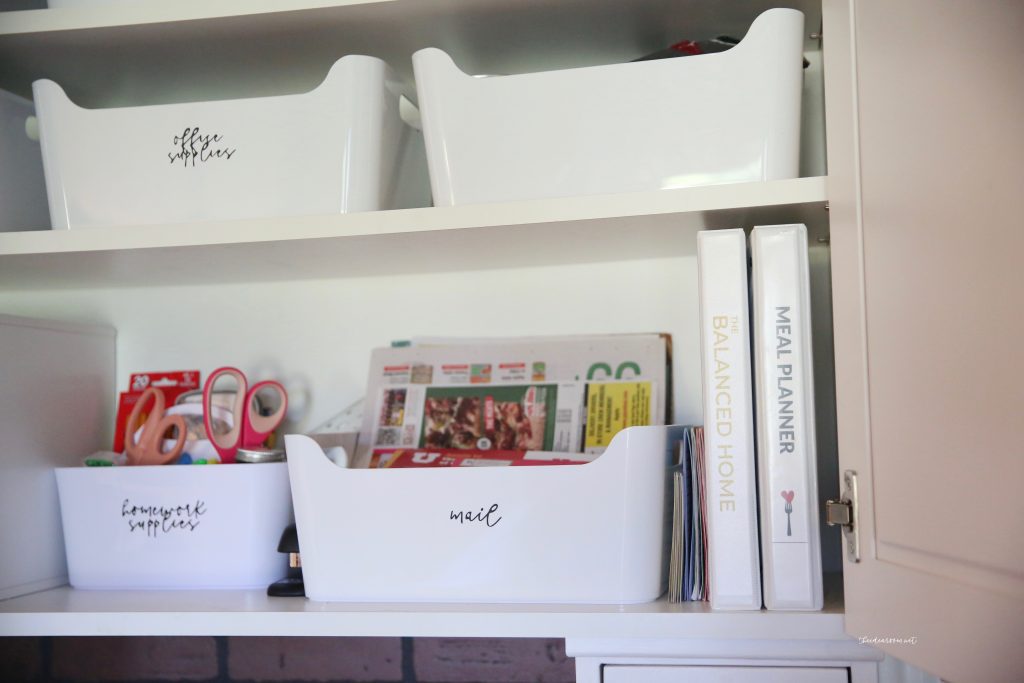

WHAT DOES THE ORGANIZATION COURSE COVER?
The Balanced Home Organization Core
($1,000 Value)Contains my core Decluttering and Organization Processes, which shows you how to:
- Learn how to declutter and organize your home–by learning processes and techniques that really work!
- Deal with stuff you don't know how to get rid of
- Understand what qualifies as hoarding
- Understand how to overcome hoarding tendencies
- Deal with your junk room or junk drawer
The Tools
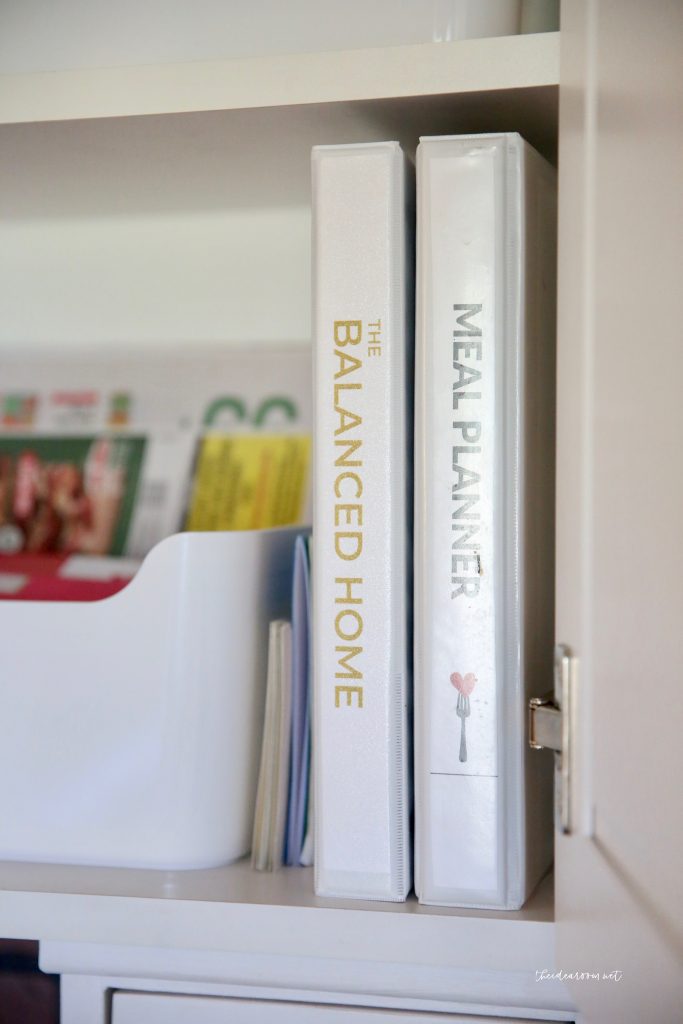
- Workbook, Resources, Labels, and More ($250 Value). Contains everything you need to help guide you through each lesson, including:
- An easy-to-follow workbook to guide you step-by-step through the lessons
- Printable Labels
- A vision sheet for your home
- A working checklist of tasks you can accomplish in 30 minutes or less
- Shopping and To-Do Lists
- Monthly Calendar and Weekly Schedule

The Mental Foundation
The best processes to overcome mental barriers from Tony Robbins and Dean Graziosi's Mastermind Course ($200 Value). Helps you to find the time, the energy and the motivation to organize your home by:
- Discovering your “true, internal why” -> what motivates you to want an organized home
- Helping you clearly identify what is holding you back from success
- Teaching you how to organize your schedule to create new pockets of time
- Helping you discover what is most important for you to accomplish with your time, as opposed to just urgent or habit
- Helping you cut out the things that aren't important and identify gaps in your schedule you can dedicate to working on your home
Your Ideal Home
The best processes to set and achieve your vision by breaking it down into actionable steps ($300 Value). Teaches you how to break down an overwhelming project into small, manageable steps, by:
- Clearly defining your goal and vision for your home
- Learning how to evaluate specific rooms and identify what you want to be improved
- Identifying specific, easy to complete tasks in each room that will contribute to your overall goal without overwhelming you
- Getting your family or others involved in the process
Cleaning and Maintaining
The best processes to clean and maintain your home after it has been organized ($200 Value).Teaches you how to maintain your home once it is clean and keep it organized, by:
- Providing you with the basic cleaning routines you need to naturally stay in control of your home
- Teaching you my amazing “Ten-Minute Clean-up” process, which allows you to clean an entire floor / room in ten minutes or less!
- Showing you how to establish routines with your kids and other members of the family
- Sharing important resources such as chore cards, favorite cleaning products, and a deep-cleaning checklist, and more
- Explaining the laundry routine we use in our home to get our laundry done every week without even thinking about it
- Teaching you how to deep clean your home after it has been decluttered and organized
- Showing you how to help the other members of your household be on the same page and not “unclean” your home
During the course, we will:
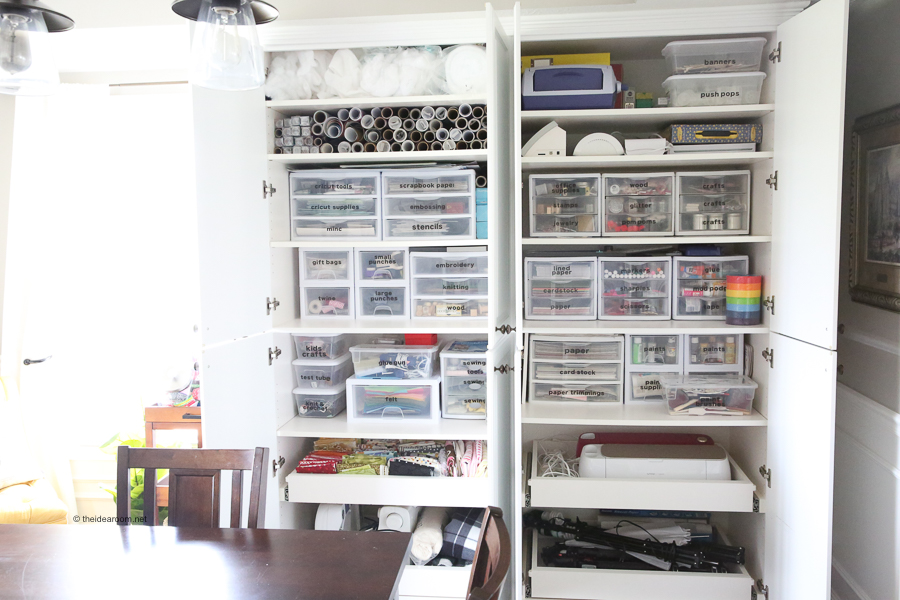
- Show you the process of how to go throughout your home decluttering, cleaning, and organizing. Then you can take this process and go throughout all the rooms in your home–including the bathrooms, kitchen, craft room, home office, basement, entryway, playroom, garage, attic, and all other rooms in your home–cleaning and organizing.
- Clean out and organize not just the rooms themselves, but organization spaces such as closets, shelves, drawers, and bookshelves.
- Learn how to properly use organization equipment, such as bins, drawer organizers, storage bins, food storage containers, lids, and baskets.
The Private Balanced Home Community
(BONUS – Priceless). Provides a community that you can go to whenever you need a place where you…
- Seek inspiration and ideas from others
- Receive support and motivation from others
- Share your successes and see the successes of others as we all work towards finding balance and clarity in our homes.
- Can ask questions and let me know what you may still need help with so that I can continue to cater the course to your needs


What Do People Have To Say About My Organization Course?
“This course was instrumental in helping me organize my space as well as my time. As a busy mom, I have a better grasp on what my days need to include so that I can enjoy my family rather than spend my time spinning my wheels cleaning up after everyone.”
“The Balanced Home Course helped me to be the “professional organizer” for my family! Simple steps to follow, check lists, printable labels, suggestions and worksheets will keep you on track to successfully maintain your own balanced home.”
“I am pretty sure I have solved more issues with the seven layers and clarity tool than I have in 6 months of therapy!! I think this course is going to help much more than my home. Thanks Amy!!!!”
When I realized I had been overcomplicating the idea of organization, that simplifying was a key component, then things really started to fall into place!”
When I realized I had been overcomplicating the idea of organization, that simplifying was a key component, then things really started to fall into place!””
HOW TO GET MOTIVATED TO ORGANIZE YOUR HOME
HOW TO OVERCOME FEARS AND MENTAL BARRIERS
I asked and these are the things that are holding you back from getting started! I made sure my course helped you overcome your specific fears and developed processes to address each of the concerns below. Have you ever had any of the same concerns?
- “I don't have the time.”
- “I don't know how to break it down into manageable chunks.”
- “How do I balance other activities?”
- “I don’t have enough energy / motivation.”
- “I'm overwhelmed and don't know where to start.”
- “I'm scared / unable to commit.”
- “I don't trust myself.”
- “I don't have the confidence I will finish.”
- “How do I maintain / keep on top of it?”
- “I have a hard time with inconsistency / finding balance.”
- “I'm afraid of quitting too soon and having it be a mess.”
- “How do I build the habits and routines?”
- “Keeping it clean and organized”“Staying focused and not getting distracted.”
- “What if I have physical limitations.”
- “I don't have the supplies / resources / money (i.e. containers etc.) / storage space.”
- “I don't want to part with things.”
- “What Do I do with all the stuff? Donate? Kids?”
- “What if I need it later?”
- “My family has stuff they want to keep.”
- “Family is not being helpful or even counterproductive… How do I get my family on board?”
- “No sense of design / vision for what I want.”
- “Lack of knowledge.”
- “Afraid of not doing it right.”
- “Being okay with not having it perfect.”
STILL NOT READY TO BUY?
Because I know that sometimes it can be difficult to take that initial leap of faith, I wanted to give you something that would allow you to get your feet wet a little, something that you could access RIGHT NOW. I think you'll like it. I've opened up a “sneak peek” section of my course, where you can access one or two of the lessons that are a part of The Balanced Home Course. If you click the button below you will be able to create your own personal account / log in for the course and access the “sneak peek” videos.

OTHER ORGANIZATION PROJECTS
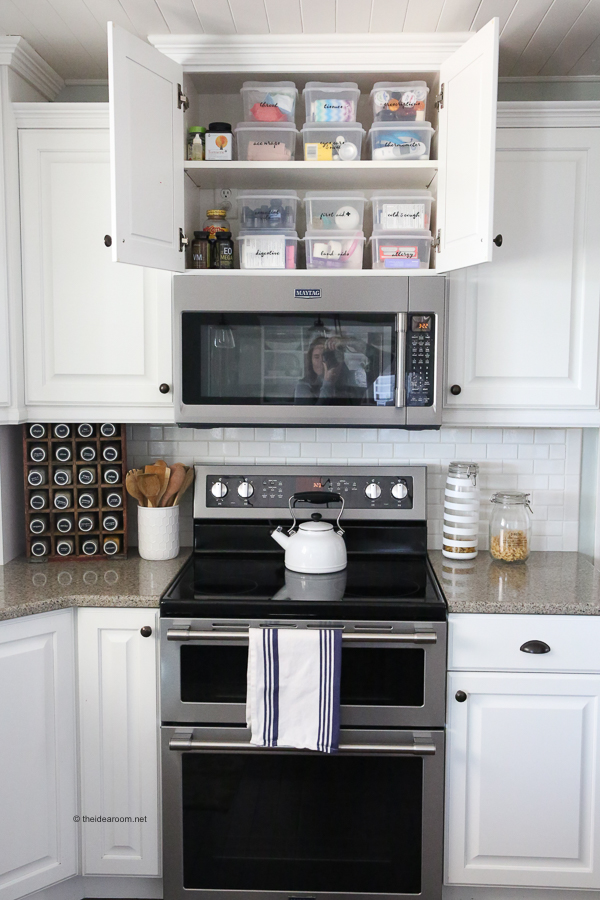
If you are interested in taking a deeper look into some of the spaces in my home, check out the following posts!






I like to use natural rewards, as in…if you do the chores quickly this morning we can have the rest of the day to play. Or…if you are nice to your siblings, they will be nice to you. Sometimes it works sometimes not. I also am a fan of choices…if you don’t stop hitting your brother you’re grounded, your choice! I usually make the choice a no brainer!
This is fantastic information and couldn’t have come at a better time. Thank you so much for sharing this!
My son is only 19 months old, but he understands that his actions have consequences and he has learned how my husband and I will react to certain actions. Sometimes he even reprimands himself! (“Uh-oh! No no! I sahwy….”). Alternatively, he knows when he has done something good, like throwing away trash, and he claps for himself and gets excited when he knows he has done something good.
It is funny that you mention the jar/marbles thing because we just started doing that about a week ago! When he does good/nice things, we give him a marble or two. When he does things that he knows are naughty, we take marbles away. For now, we will be choosing the rewards when the jar is full. When he is older we plan on sitting down with him and having him come up with his own ideas for rewards as well.
I agree with Syndy – choices and natural consequences! That is how my mother parented my siblings and me. She would say “You can clean your room and then go and play, or you can leave it and be grounded. It’s up to you. You have until *** o’clock!” If we didn’t pick things up, she would confiscate the item(s) and say “Well, I guess you don’t want/need/care about this, so I guess I’ll just take it.” and then we would have to earn the items back. We quickly learned to appreciate and take care of things!
Great post!! Something you don’t hear enough of! Thanks for posting!
I am currently reading a book called, Shepherding a Child’s Heart, by Tedd Tripp that addresses this exact issue. It’s written for Christian parents and is SPOT ON :) A friend recommended it to me and it sat on my nightstand for months before I cracked the cover. Now I’m kicking myself b/c the book is so relevant. I’d highly recommend it :)
Thanks for that. Great information. I appreciate that you told us how to solve the problem.. not just tell us why we shouldn’t do that. Thanks again!
I think each child is different and there are no hard and fast rules for all children, yet, I completely agree we can’t reward our kids for doing what is right. In the real world, you don’t get a reward for what is right. In my household, you can’t earn an allowance unless you go above and beyond what is expected as being a member of a family. As a parent, I don’t get paid to clean the house or cook dinner (and thank goodness, or we’d have no income right now :) ), but I know I have a responsibility to do so. I feel my child as a responsibility to do a certain set of chores as well. If she chooses to go above and beyond, she *may* be able to earn an allowance.
Come on over to heymothersletsbesisters.blogspot.com for lots more discussions like this one!
Love this! I think all parents struggle with this and we always have to be on our toes….thanks for the tips, Heather. I am enjoying the parenting discussion;)
Great post. I agree rewards are quick fixes that sometime suck us in! We’re working with our 4 year old to think more about his actions/behaviors and what they mean. He has a be good chart to help keep track and allows us to take time and talk about how he acted throughout the day. Heavy stuff for kids but hey we’re their parents someone has to teach them right!
LOVE – LOVE- LOVE! Everything you said is true! I have my masters in Early Childhood Education and have studied extrinsic vs intrinsic motivations and the long term effects. Intrinsic motivation and rewards are definitely what children NEED! Thanks for posting.
Yes! Good tips. I often say, “I bet you feel proud of yourself!” and “How does that feel?” Sometimes they just look at me, like “What?” I’ve been thinking about starting a family reward jar for the summer.
THANK YOU SO MUCH !!!!! This post is so awesome. I constantly struggle with keeping my mouth shut. We have a lot of friends with younger kids and some of them have this Entitlement attitude when it comes to doing things for the right reason. They will do what they are told as long as they get something out of it. It may be cute as you said at age 2 but at age 15, 16, 17, Not so much. My kids help out because the attitude in our home is “to serve one another, to help each other, when you love someone, you just go out of your way to help out”. My kids do get an allowance and it is very small, $3 dollars a week. They are expected to do their chores, help make dinner, help grocery shop, and care for the animals (2dogs, 5 chickens). They are also expected to purchase their own treats, toys etc… when we go to the store. It helps them to be more appreciative of these items and to be aware that things don’t just appear, because they want it. Also It teaches them to save up some money. It took a while at first, they would blow it all in one trip to the dollar store. Then they realized If they wanted to have the freedom to purchase things through out the week they better save some for later. People we are raising the next generation that will enter the work force. Look at the one we have now…. ENTITLEMENT….”Our employees don’t get paid enough to give good customer service” Quote from a store manager I spoke with.
ONCE AGAIN THANK YOU!!!!! this is a great post and people need to hear this.
I am an Early Childhood Educator and agree with most of what you are saying. However, I would also ask you to look at it from the following point of view. You have a job. You get up and go to work for 8 hour a day, seven days a week to recieve a paycheck. If your boss came in one day and said, “No more paychecks. From now on, I will just tell you how good you are working and maybe spend some extra time in your office.” how much longer do you think you would be willing to work there? I’m not saying you should reward or bribe your child. What I’m saying is that a system should be established so they understand that everything is valued. Everything has a consequence. That consequence may be in the form of ice cream, a movie, $$$, or it could be in the form of time out, losing priviledges, or even monetary payment to you. What keeps it from becoming rewards and bribery is that your system is established ahead of time and is consistent.
Fantastic post! Thank you for a great reminder and some great ideas.
great post. I just finished reading “Unconditional Parenting” by Alfie Kohn and this is what it’s all about for me now!
They’re similar to a plant, so they require moisture and oxygen to survive.
As a result of the media, many consumers believe they could do away with mold
on their own. Health issues arising from shape infestation
could kill.
Adult males, 40years oldd as well as above are
prone to that, as well as diabetic people. In some cases, the alergic
reaction might be severe enough to create a case of hives.